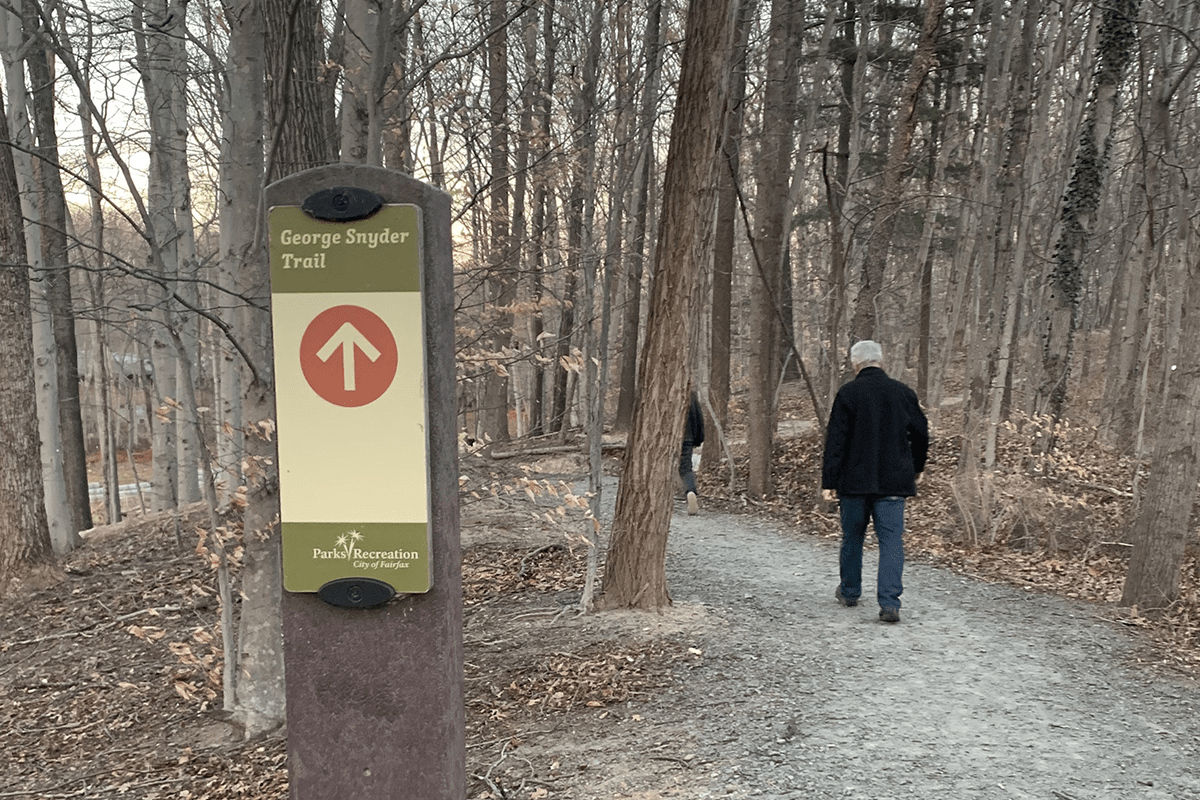
Who said local citizens in Northern Virginia can’t move mountains and save a local forest? A group of dedicated local grassroots advocates did just on January 13, 2026, despite how seemingly impossible their quest appeared.
Environmental advocates worked tirelessly month after month, year after year, to rally support to end the George Snyder Trail extension plans. A big win for trees, plants and wildlife!
At a public hearing on January 13, 2026, Fairfax City Council members voted to both end supplemental appropriations for a bike and pedestrian trail, and also end the five-year-long area plan by voting 4-2 to cancel the project entirely.
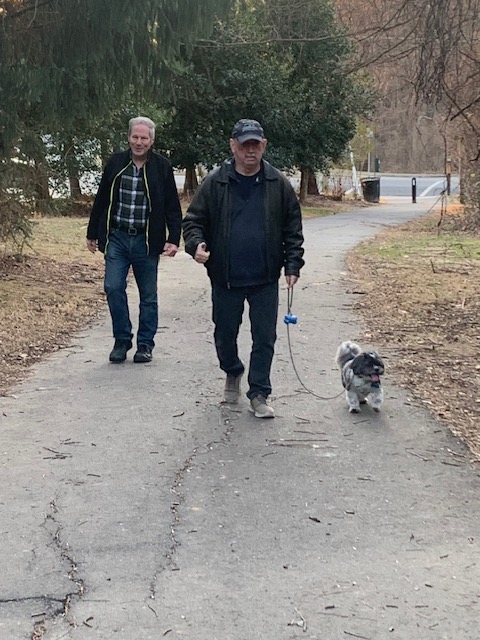
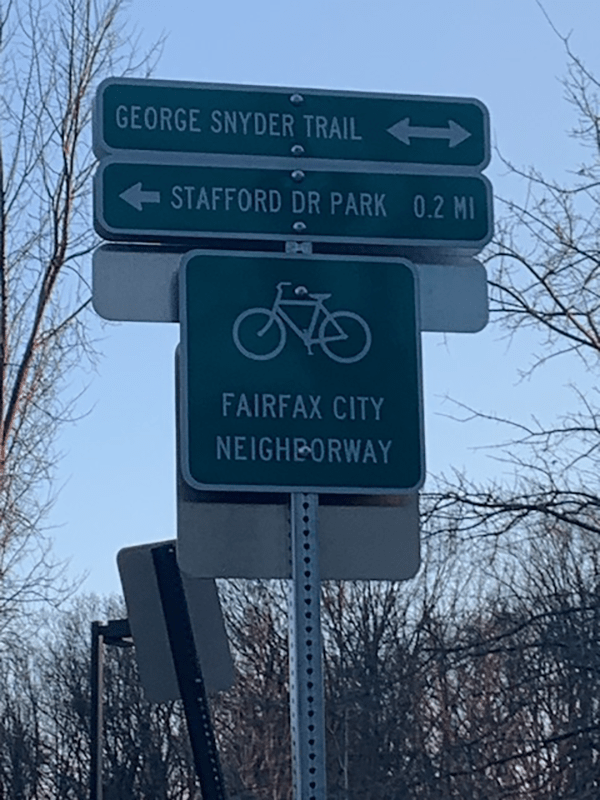
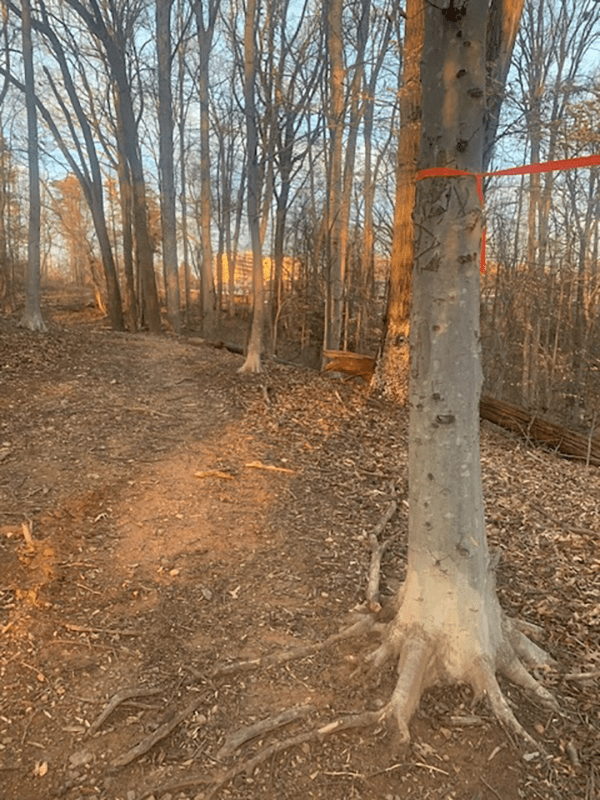
While environmentalists raised numerous concerns over the years about tree loss and devastation to the woodland ecosystem, others pressed for a trail extension to improve connections for pedestrians and bicyclists. The long-planned trail extension would have run along the south side of Accotink Creek for about 1.8 miles from Chain Bridge Road (Route 123) to Fairfax Boulevard (Route 50), connecting the current George Snyder trail to the I-66 shared-use path.
The cancelation of the George Snyder Trail expansion, was largely due to grassroots activism aimed at preserving a forest. Katy Johnson, who has worked at the Fairfax Racquet Club for 34 years, began her involvement with the George Snyder Trail project in 2020. She took a leading role in spreading awareness, stating, “I lead the charge in spreading the word.” Judy Fraser has been active since 2018, described by Katy as “Gandalf—so knowledgeable.” Sue Kuiler, who joined the effort after meeting Katy at a stream restoration meeting, became involved because her neighborhood would have been heavily impacted. Sue played a vital role in mobilizing her community.
The Friends of Accotink Creek joined the effort, at the beginning, in 2018. After a disappointing Council vote to proceed with the full build, rather than giving up, Katy doubled down on her commitment to learning about trees. She recounted, “I went home from the meeting that night and registered for Fairfax Tree Stewards Training.” After gaining knowledge about the project, the Fairfax Tree Stewards joined the fight in 2024.
Katy highlighted how environmental organizations were “absolute game changers and amplified our message.” She also joined the Northern Virginia Bird Alliance Advocacy Committee. Tom Blackburn, the Committee’s Chair, did a foot by foot analysis of the trail using the plans posted by the City and confirmed this was far worse than anyone had ever dreamed, especially after the devastating stream restoration in the same narrow forest. Virginia Native Plant Society Potomac Chapter President testified on behalf of the mature oak hickory forest. Instead of giving up after the aforementioned crushing defeat, Katy joined Tree Stewards Training and they joined the fight. When the coalition was advised to get new voices, Katy invited A.E.R.O. and Climatic Action NOW to jump in. Katy says that this “pushed us over the finish line.”
Katy described their coalition as a “small band of forest-loving neighbors,” affectionately dubbed the “Crazy Tree People” by the Mayor—a title they now wear with pride. She emphasized the importance of collaboration, saying, “It took what I like to call ‘cross-pollinating’… every voice and every organization was necessary.” Katy expressed hope that such alliances would continue in future conservation efforts.
City of Fairfax board meeting / public comment on George Snyder Trail Extension
Testimony of Kathleen A. Brown
CAN Board, Director of Media & Communications
Good evening.
In the words of David Attenborough, “ancient trees are precious. There is little else
on Earth that plays host to such a rich community of life within a single
organism.”
I speak tonight as a board member of Climate Action Now, an organization which educates through the presentation of environmental films and documentaries at Cinema Arts Theatre right here in Fairfax City, on the very urgent issues of our time – extreme weather, record temperatures, biodiversity loss and ecosystems stress – among others. After the film, panel discussions between local experts and attendees from all over Northern Virginia are a testament to your very residents growing engagement on urgent climate matters.
I also speak as a member of a group of residents in the Seven Corners area of Fairfax County, which successfully fought off paving two-acres of land in an area of the County with the highest socio-economic needs and the lowest amount of parkland. Half of Justice Park’s 18-acres is an urban forest with a tributary of Tripp’s Run which runs into Lake Barcroft nearby. Justice Park’s 8-acre forest is a smaller version of your forest. Having walked portions of the trail – the proposed extensions clearly struck me that while the 2-acre paving inside Justice Park was a parking lot, this planned bike trail is an urban forest superhighway. It cuts deep, wide and through the very center of the forest. Your costs in tree loss, stress on Accotink Creek, loss of plant and animal habitat, and decades of soil enrichment are too high a price to pay.
While improved pathways for bike and pedestrian travel are certainly valuable, the
proposed route for the extension and its massive retaining walls are too intrusive,
destructive and costly in funding, tree and animal habitat loss, watershed stress, and
soil degradation.
Preservation over paving is the best path to take through your remarkable and rich urban forest. Your determination this evening will be felt for generations of human, animal, tree and plant life – not only for our common survival but for our flourishing.
Thank you for this opportunity to weigh in.
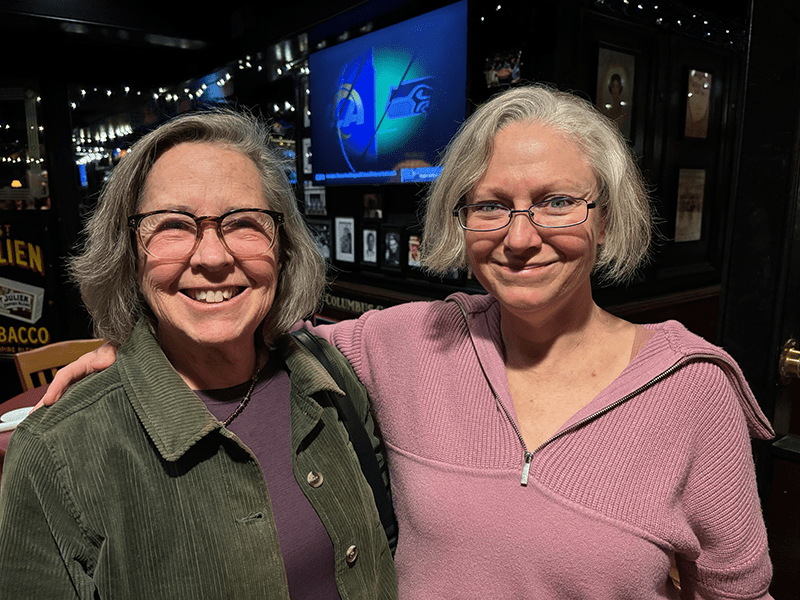
CAN Board Member Kathleen Brown, and Katy Johnson, who is very proud to be referred to as one of the “crazy tree people.”
Written by Kathleen Brown and Katy Johnson

 Climate Action NOW (CAN)